Wednesday, March 18, 2009

Limitations of Political Power


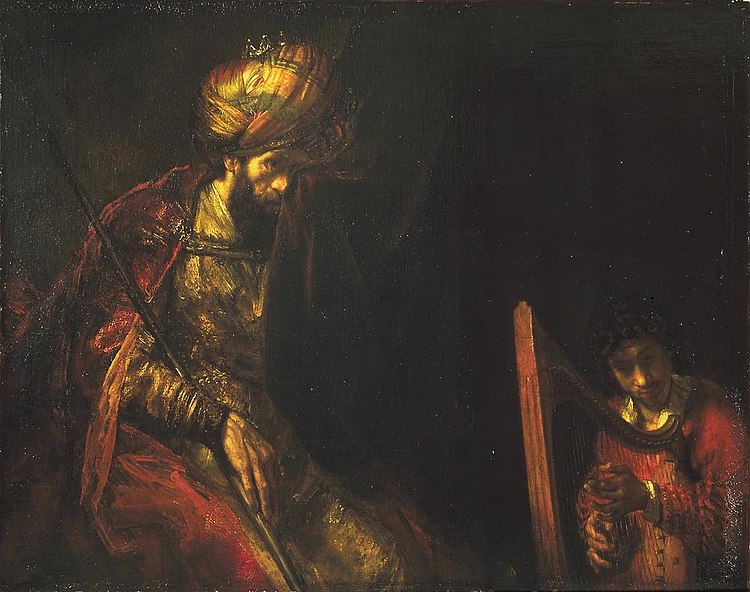
David Plays the Harp for Saul by Rembrandt

~ When the Israelites ask for a king, Samuel reminds them that God is king. Yet the people insist and they get a king. However, the people soon realize that a king, whoever he is, may not give them happiness.

A utopian state is a lie. It has never existed and may never come into existence. Even if it did, such a state of never ending happiness and bliss is unsustainable. After failing to build heaven on earth, humanity then decided on trying as hard as they can to create as close as they can the image of utopia. Thus, the various forms of political systems came into existence as we can see in the world today. From the third meditation, we know that a perfect state is an illusion. Therefore, a perfect political system is also an illusion. Yet, is it possible that a particular political system be relatively better than another?

The first political systems after the dawn of civilizations were predominantly authoritarian. There are two forms of authoritarian systems, namely, an autocracy whereby a single head rules the state and an oligarchy in which the state is ruled by an elite group. Most of the early civilizations were ruled by monarchs, pharaohs, caliphs, sultans, and emperors and thus can be categorize as a form of authoritarian states. Although many aspects may differ, most early civilizations were ruled by a single head with absolute power (usually because of being an offspring of God or by heaven’s mandate)

There were however exceptions to this commonality in Greece. In Ancient Greece, all city states (each city was a state by itself) were autonomous to a certain degree even though they may have shared a common culture and geographical location. The Greek city states were an extreme form of democracy which resulted in the each city state fighting amongst one another as much as they fought any external force which threatened their independence.

After the great experiment of the Ancient Greeks, authoritarian political systems would continue to dominate history until the emergence of totalitarian political systems. Totalitarian forms of government have existed in the past (though very rarely) and are an extreme form of nondemocratic ways of governance. Examples of totalitarian states can be found in Nazi Germany, the Soviet Union under Lenin and Stalin, and China under Chairman Mao.

The leadership of a totalitarian state is normally an indispensible dictator whose ideology drives the entire state’s economic, social, and political policies. Totalitarian leaders usually promise the people a state of utopia should their policies succeed and is normally the justification of their absolute power. Indeed, all three totalitarian states in history as mentioned above promised their citizens utopia through the adoption of certain eugenic policies. All three states however, have failed in history to achieve utopia.

Modern democracy on the other hand has no fixed form and is a misnomer. All previous civilizations at the time of their height would have thought themselves as the most ‘modern’ civilization and thus the pinnacle of human achievement. For the purpose of this discussion, our current form of democracy is not one but many. Elections and representatives of the people, by the people, and for the people is the common feature of a democracy. Yet in reality, the presidential system of the United States and the parliamentary system of Great Britain is vastly different in the manner of electing the people’s representative, judiciary system, and administrative structure.

Similarly, the democracies of France, Germany, and Japan are different in many aspects. This difference in the various democracies may, of course, be inevitable as the demographics, agenda, and economic factors from each country differ from one another. While the Americans may be more concerned about their national debt, the British may put more emphasis on the acts of terrorism by Northern Ireland’s IRA (though both countries are currently mainly concerned with the economy) and so both political systems would and should adapt to their respective needs.

Abraham Lincoln once said, ‘that government of the people, by the people, for the people, shall not perish from the Earth.’ Lincoln was right but only in a utopian sense of thinking for no form of government and political system is of ‘all’ the people, by ‘all’ the people, and for ‘all’ the people. Just put two individuals in the room and it is likely that they both differ in their wants or need! How then is utopia possible? Therefore, all forms of governments and political systems are flawed as an authoritarian state faces the tyranny of a dictator while a democratic state faces the tyranny of the majority.

This imperfection brought the philosopher Voltaire to say that if we were to ask the rich, they would choose aristocracy, while the people would choose democracy, and the monarchs would choose monarchy. Therefore, in reality each of the above would protect the interest of a certain group at the expense of another group (though this may not be a zero sum game). Thus, we have come to a crossroad and must now answer the question of whether one political system is better than the other.

Yet, the question above is flawed as we already know that each political system is better only for a certain party or individual. Taking this into consideration, the right question should be whether a political system is better at a particular period of time to face a particular form of challenge from the external environment. Here, the answer is not so simple, for one form of government may be replaced by a different form of government which is equally imperfect. However, in a utilitarian sense (the greatest good for the greatest number of people), a perfect form of government can be determined after one fixes the boundary, parameter, conditions and the specific length of time.
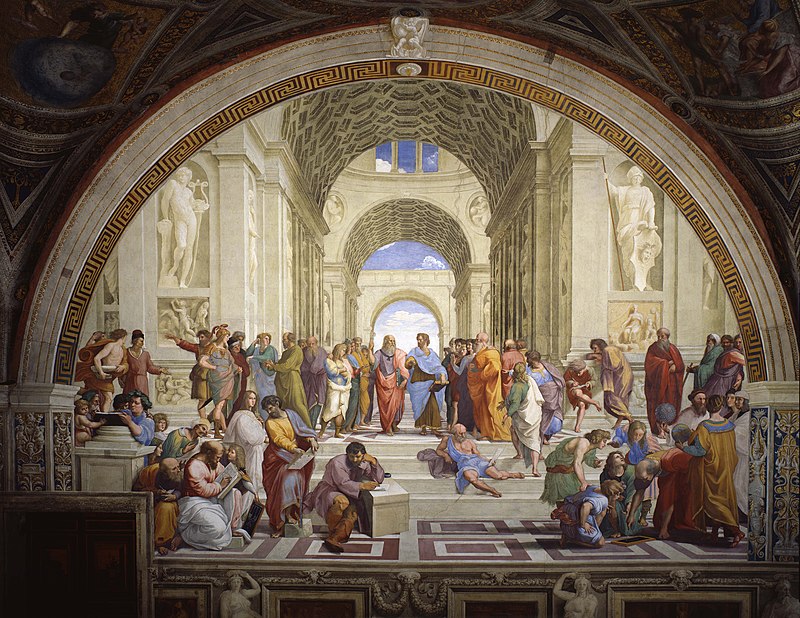
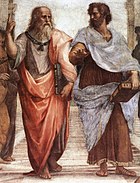
The School of Athens by Raphael

Athens versus Sparta, Democracy versus Authoritarian

Both Athens and Sparta were Greek cities that were similar in race, culture, and common language. In reality, we can seldom find cities that are so distinctively different! For Athens was the capital of knowledge of the Ancient world and stood high and proud in the plains bordering the sea and the wind. Sparta on the other hand, is located at the bottom of a deep valley, and detested all forms of foreign knowledge. Athens was a city, a port, and an academy which was always busy with trade and maritime activities while her brother Sparta toiled and trained under the sun and under the rain to churn out the mightiest soldiers the world has ever seen.

In Sparta, people were soldiers for the sake of being soldiers. In Athens, people were philosophers for the sake of being philosophers. Politically, Athens was like the sun, full with passion, and forever changing while Sparta was the moon, consistent, rigid, and resisted change. For Athens was a democracy and all political decisions were made through the vote of majority (ecclesia), while Sparta was an oligarchic authoritarian state in which power rested in a council of old men, five magistrates (ephors), and two hereditary kings with special military power.

The history of Athens and Sparta unfolds akin to two siblings fighting for the attention of their parents (not literally, but who is greater). For a period of time, Athens had the best form of government for it was the light of the world (arts and science) and the might of the sea (its navy). Furthermore, Athens churned out more philosophers, scientists, doctors, and anything else but soldiers than Sparta. However, at the time of crisis when natural disasters and economic instability wrecked havoc on Athens, the votes of the majority (democracy) chose the wrong leader at the wrong time and the city state was doomed to fall.

And fall it did! For during times of prosperity and bliss, democracy is the best form of government. But in times of crisis, the Spartan authoritarian political system reacted faster, stronger, and more united than the Athenian democracy. And so it came to pass that Athens, whose people were fighting internally among themselves as much as they were fighting their common enemy, fell into the hands of Sparta and fell into ruin and decadence.

In history, the story never ends until there are no longer any living human beings. But the apocalypse, the end times, and the Ragnarok did not happen when Athens fell and so we have the privilege to continue the story to a point whereby the strength of arms and the might of shield (Spartan shields in reality were unique with the Greek sign of lambda) of Sparta was no substitute to the freedom and the will of the majority demanded by the people. Sparta fell, and its fall was so great that its form of governance did not reemerge until the 19th century (Nazi Germany and the Soviet Union of Stalin).

In the knowledge that no form of political system is perfect for all times, we still can find a truth to which we can base our meditations on. For if A does not equal to B and B equals to C, A does not equal to C. Using deductive reasoning, the first meditation shows us that we cannot understand fully and absolutely the will of God due to the limitations of pure reason and the senses. However, even if we do not understand God, ethics is necessary for social order. Ethics on the other hand, is relative to the individual and although necessary for civilization must rely on power to enforce it.

Power then comes through the people’s acceptance of a form of government and political system which, as proven in the third meditation, can never be perfect. So man, unable to create heaven on earth (utopia), must now settle for an imperfect political system. So, which then is the best form of government? The answer depends on the situation and challenges the system is subjected to. For a democracy is the best form of government when times are good and food is plenty but is found lacking when desperate measures are required urgently. Here, we can pose another question as to how a government enforces the power given to it by the people. In other words, in what form is power found in a state?

This concludes the fourth meditation and opens a path to the fifth meditation.

Tuesday, March 17, 2009

Woman Against Man and the Ascent of Man


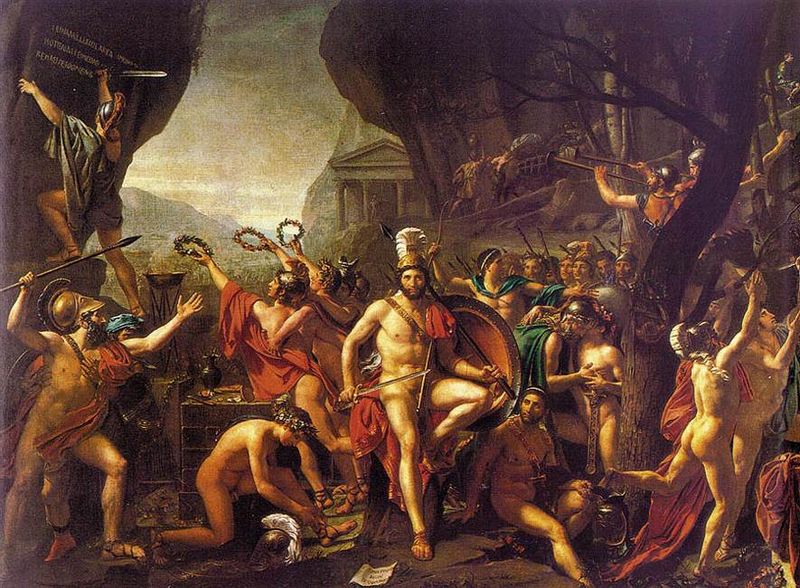
Leonidas at Thermopylae by Jacques Louis David (1814)

This is yet another true dialog between me and a girl that of course was published with our joint consent. And so it came to pass that the first interlude was published and read by many people with different thoughts and ideas. While many disagreed with man, there were also many that disagreed with woman. But all of us agree on one thing and that is we all may still agree that we disagree. And thus, life goes on.

_

Woman: I prefer to have some intellectual conversation between men and women.

_

Man: Men and women? Plural? Why not an ‘intellectual’ conversation between you and me?

_

Woman: Singular works just fine.

_

Man: However, even if we had an intellectual conversation, you know I would lose……in order to win.

_

Woman: Damn you!

_

Man: Oh, please do not get angry. I do not want to win and therefore I win by losing.

_

Woman: What is the consequences of winning the fight/conversation?

_

Man: I would feel bad for not being a gentleman. And frankly, whatever hurts you, hurts me.

_

Woman: Do you still think that you are a gentleman if you let a lady think she has won even though she has lost?

_

Man: Of course not! I am a gentleman by letting everyone else think you have won..

_

Woman: Utter nonsense! At the end of the day, you know that you have won! However, looking from this another perspective, is this not a world that the majority wins? So if the majority thinks the lady has won, who is the gentleman to think he has won?

_

Man: Here is where you are ultimately wrong. For this is a world where the majority votes but the minority rules! Any form of government and political system in the world has a structure that the minority rules the majority.

_

Woman: But this minority is voted by the majority!

_

Man: But the majority can never rule..

_

Woman: You cannot have the majority to rule the minority! You cannot have a government that outnumbers the people! If that were to happen, there would be no nation at all!

_

Man: Exactly! Thank you for supporting my stand!

_

This concludes the second interlude. The reader can now see the paradox that plagues humanity. For even if the power of the minority comes from the majority, in reality, the majority can never rule. Furthermore, the purpose of this interlude is not some petty squabble over politics but to show the two different forms of thought and opinions by two different individuals.

Let a hundred flowers bloom and let a hundred schools of thought contend. ~Chairman Mao

~

_____________________________________________________________

Monday, March 16, 2009

The Limitations of Man’s Ambitions


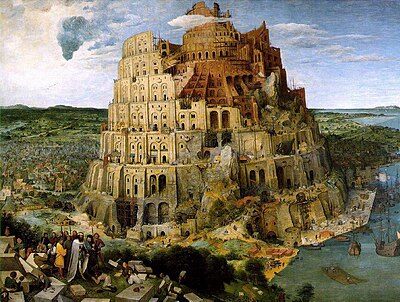
The Tower of Babel by Pieter Brueghel the Elder (1563)

~ The Tower of Babel is the famous story of how man in pride attempts to reach the heavens. Utopia is man’s attempt to create heaven on earth. Yet as man tries again and again and fails again and again, should we not admit that Utopia is out of reach of our mortal hands?

After writing the first and second meditation, I have humbly requested the feedback of many friends and associates of whom I hold in high regard and respect. Of some of the important feedback that I received was that both the First and Second meditations contain no solid or absolute conclusion on the subject in discussion. I would like to stress as I have done so in the First meditation that all that I have written in the Meditations consists of an observation that attempts to use the Socratic Method (elenchus) to which a problem is solved by breaking it down into a series of questions to gradually find the answer (or a truth if one so exists).

In the first meditation, I have pointed out that the limited ability of reason and senses is inadequate for an absolute understanding of God. This results in a direct attack upon morality as defined by religion through divine revelation(s). The second meditation continues by arguing that to preserve order, ethics and morality are needed even though the ‘right’ and ‘legitimate’ ethics and morality are often in question. Furthermore, history has proven to us that power is essential to eliminate to a certain extent absolute moral relativism.

The logic of the argument is that without the elimination of absolute moral relativism (whereby everything goes), there would be anarchy and chaos at a level that mankind would be unable to coexist as a community and much less as a culture and a civilization. Yet, since pure reason alone has not been able to unite all forms of religions, ethics, and secular moral philosophy, we find that power is essential in order to forcefully enforce the will of one group of individuals upon the majority.

Yet, the origins of power come from a rather linear form of bestowment as it comes not as an intrinsic property like in nature with a lion being more ‘powerful’ than a lamb but as a ‘gift of acceptance’ in which the leader, or ruling party is generally accepted by the relevant community. This is to say that power to preserve order must come from the acceptance of at least a group of people within the community or risk being illegitimate.

Consequently, to maintain order, a ruler needs power, which comes from the people. A ruler would then continue to hold power as long as he is perceived to be an agent of justice (here justice is subjective and may be just a form of perceived justice) or through military and economic might. While it is common to find that the minority in the community often rules the majority, the loss of the ruler’s core supporters (power base) would spell the end of his power and thus his legitimate rule of the community.

Of Utopias and the Great Lie

The word utopia can be traced to a book written by Sir Thomas More (1478-1535), the chancellor of England. Coined from the Greek terms ou topos, utopia refers to a place of perfection in which people enjoy health, harmony, and happiness. Political philosophy is filled with utopian models of society to which different philosophers come out with different answers as to what would lead to a state of utopia.

Plato’s Republic


Philosophy according to Plato is the answer to which a utopian state can be created. In Plato’s Republic, a simple society with no government and scarcity would, in order to avoid monotony and tedium, seek luxury. But the want of luxury would force the need of expansion, to which soldiers are necessary for growth and to safeguard the state’s newly acquired territory. Soldiers would then form the second layer in society that is called the guardians.

The guardians are then educated in a wide range of physical and mental aspects and to live without any form of personal property. At age 20, the guardian class would be divided into two with the first group assigned as auxiliaries to defend the Republic as full time soldiers. The second group would retain the name guardian and continue their education. Selection at this particular point would be based solely on merit and as the guardian gained wisdom and knowledge after a prolonged period of study, he then may become a philosopher.

Due to the importance of wisdom above all other things, philosophers alone are allowed to rule the Republic as philosopher-kings. Thus Plato’s Republic is made up of three classes of which the first is the normal citizen (farmers and artisans), the warrior-soldier class, and the philosopher-guardians. Thus, behold the Republic, a utopia to which philosophy would be the answer to the perfect society.

Francis Bacon’s New Atlantis


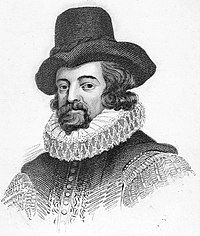
The New Atlantis, written by Francis Bacon (1561-1626) , describes a voyage by sea to an island that is governed in such a way that its inhabitants are in happiness and bliss. The island which is called Bensalem is geographically isolated and, therefore, free from invaders while at the same time economically self-sufficient. In Bensalem, the family is the foundation of the society and perfect laws ensure that justice and the good of all are upheld.

Distinctively different than Plato’s Republic is the importance of science as the cornerstone of which scarcity of resources and the needs of the people would be fulfilled. Also through science, natural disasters can be predicted and thus precautionary measures implemented to protect Bensalem from tragedy. To achieve technological and scientific superiority, the best minds are brought together at a great college whereby experimentation and observation would bear fruit for the greater good of all.

Karl Marx’s Classless Society


For Karl Marx, economic inequality associated with capitalism is the cause of mankind’s suffering and hardship. In Marx’s Capital, economics in which the production and distribution of necessities is the crucial element of human life. According to Marx, capitalism that encourages income inequality, widespread economic imbalance, and the monopoly of the means of production by owners would inevitably crumble under its own weight through revolution of the working class (proletariat).

The destruction of capitalism would then lead to the first stage of communism whereby a dictator of the proletariat will remain as a bulwark against counter-revolution. Also in this stage, revolutionary policies that would include the abolishment of private property and the right to inheritance would be carried out. After all means of production are owned by the state, the government would slowly fade away, as a classless society would emerge to which all individuals would be equal and live in a utopian state.

A Critique on Utopias

Never in history has a utopian state has ever existed on the face of the earth. Whether it is the Mesopotamians, Egyptians, Ancient Greeks, and Romans, a utopian state with all parties and individuals content and happy has never been within mortal grasp. Indeed, Plato’s Republic and Bacon’s New Atlantis have never been carried out in reality due to the obvious reasons of impracticality.

Although Plato’s work was right in stating that rulers should be well versed in philosophy, and that philosophy is the supreme wisdom, who is to determine which school of philosophy is greatest and most complete? Similarly Bacon’s New Atlantis assumes that scientific and technological superiority could be sustained throughout the ages which, of course, in relation to reality, is an impossibility.

While it should be noted that history has never seen a utopian state, the real question is whether a utopian state is sustainable. Due to the fact that economic, demographic and environmental changes occur constantly over time, would it be possible to have a form of government that could suit all challenges at all times? Evidently, a utopian state seems not to be a practical possibility.

This then brings us to the last utopian model which unlike the earlier two has been given a chance in history. Communism did indeed achieve widespread popularity most notably in the former Soviet Union and also in the People’s Republic of China. But instead of ushering an age of happiness and prosperity, the abolishment of private property took away the individual’s incentive for labor and achievement.

As the situation as described above intensified, Communism’s policies that attempt to create economic equality made everyone equally poor (though the social elite maintain a certain level of luxury). This brought a systemic collapse in the economic structure of the Soviet Union while China under the leadership of Deng Xiaoping pursued more ‘open door’ policies and market oriented economic activity in order to avoid an economic disaster in China. Changes in China showed the departure from some of the principles of Marxism and Communism at least on the economic front.

We can now see that Marx’s prediction of the collapse of Capitalism did not materialize and that Communism’s economic policies brought not prosperity but poverty to the countries that adopted them. Surely a country with no food on the table is unable to achieve a state of utopia. Not only did Communism fail to be better than Capitalism, it performed far below that of market oriented economies.

After taking a brief look at the models of utopia, we can conclude that none of the three models above are viable and indeed practical as a form of government. Even if the failure of the utopian state rests upon human nature, it would be impossible to eradicate all traces of human nature unless it comes to pass that one would be able to eradicate free will and conflicts of interest (life at this point becomes meaningless). If utopia is unattainable, we should then take a look at the various forms of political systems that exist today in reality. As such, the next meditation will attempt to compare and contrast the various types of political systems in the world today.

~

_____________________________________________________________

Sunday, March 15, 2009

The Limitations of Ethics, Moral Philosophy, and Absolute Relativism

The Fall and Expulsion from Garden of Eden by Michelangelo, Sistine Chapel, Vatican City

~ The Fall and Expulsion from Garden of Eden is the sixth scene in the chronological order of the narrative in the Sistine Chapel. The image consists of three pieces of which the fallen pair is depicted to the left, the pair being expelled by an angel in the right, and the tree of knowledge of good and evil in the center.

It has come to pass that after the first meditation on the relationship between God and Man that I felt my heart in a troubled position. The acknowledgment that man for all practical and logical reasons cannot understand God in full as an ant could not fully comprehend a human being has shaken the very core of my earlier beliefs. For if humanity cannot understand God, it would be impossible for humanity to understand the absolute will of God.

Thus if what I thought be so, ethics and moral philosophy which is so commonly associated with God and religion may not be able to stand alone. A brief look into history reveals that ethics and moral philosophy is commonly augmented by divine revelation of some kind to increase its validity and strengthen its authority. So my thoughts came to rest upon secular ethics and moral philosophy of which God and religion plays no or a lesser role.

Subject

Definition

Sanction

Ethics

Right and wrong as defined by conscience or reason

Conscience, praise or blame, reputation

Religion

Right and wrong as defined by religious authority

Conscience, eternal reward or punishment

Law

Legal and illegal as defined by judicial body

Punishment by legislative body

Etiquette

Proper and improper as defined by culture

Social disapprobation and approbation

Source: Ethics, Louis P. Pojman

Secular ethics are at its fundamental roots different than religious ethics. While religious ethics are metaphorically vertical in the sense that it comes normally from divine revelation or intervention, secular ethics, on the other hand, derives its authority by usually appealing to the logos (logic) and acceptance of the society in a horizontal manner. Yet without perceived divine revelation that grants its legitimacy, would secular ethics be able to achieve the same authority and acceptance as religious ethics?

Aristotle

Generally, secular ethics and moral philosophy can be broken into three main branches. The first is Aristotle’s Aretaic ethics in which one must first develop character or virtue to ensure that good and right behavior becomes habitual. However, Aristotle’s golden mean whereby one should abstain from the extremes and find the middle quality is rather blur in determining what really is the middle position of things.

For as Will Durant states, Aristotle’s golden mean would mean that between cowardice and rashness is courage; between stinginess and extravagance is liberality; between sloth and greed is ambition; between humility and pride is modesty. But unlike a mathematical mean, the extremes in behavior and thought cannot be quantified and thus it is impossible to determine the golden mean accurately, either by independent judgment or by empirical calculations.

Immanuel Kant

The second branch of secular ethics emphasizes on the nature of the act and forms the core of deontological (duty) ethics. An example of deontological ethics would be Immanuel Kant’s theory of categorical imperatives. Immanuel Kant (1724-1804) argues that there are two kinds of imperatives , with the first being the hypothetical imperative which is conditional, and the categorical imperative that is not conditional but is universal and rationally necessary.

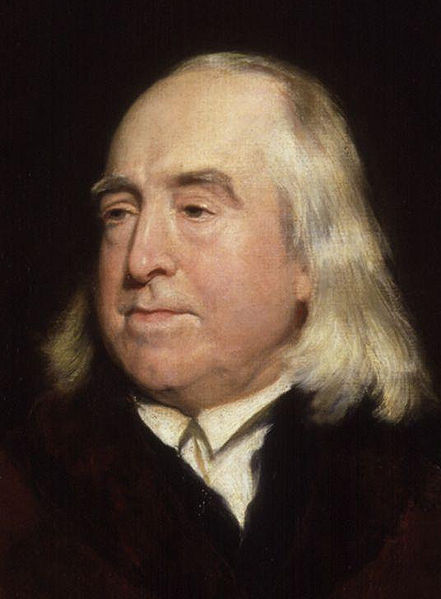
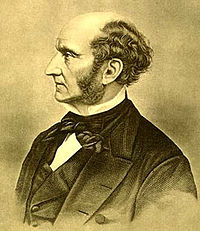
The third branch of secular ethics are theories of teleological ethics (goal directed) that focus primarily on the consequences of an action rather than the nature (deontological) of the action. Among the theories in teleological ethics is utilitarianism whose founding fathers are Jeremy Bentham (1748-1832) and John Stuart Mill (1806-1873). Utilitarianism stresses on the ultimate goal – producing the greatest happiness for the greatest amount of people.

Jeremy Bentham John Stuart Mill

All three branches of secular ethics and moral philosophy are, however, not absolute as the lack of divine revelation of absolute authority is absent in determining which form of secular ethics is right. And since all forms of secular ethics and moral philosophy are not without weaknesses, flaws, and a lack of synthetic form, they are imperfect and subject to the situation to which they are implemented and to the individual’s perspective and position.

Therefore secular ethics and moral philosophy face an assault to what we commonly know as ethical relativism. Ethical relativism holds that there are no universal moral principles and that all moral principles are subject to culture and the individual. This stand is popular and in many ways logical. A good example would be the Spartans of Ancient Greece that were known to discard deformed children (and leave them to die), and accepted that stealing is morally justified.

While we may believe that the Spartans were wrong in many ways, their society at that time accepted their actions as a social norm, thus making it morally justified. This form of thought would lead to the downfall of moral objectivism (there are universal moral principles) and the emergence of subjectivism whereby, “morality lies in the eyes of the beholder” as the victor. Yet if this be so, would not subjective morality lead to increased anarchy and chaos, the very things that morality is supposedly there to prevent?

Furthermore, since no man is an island, a man, who believes that his actions are morally justified through moral subjectivism, would inevitably commit an act that would affect another individual whose moral principles might not be in line with his own. As we well know, what is good for one individual might not be good for another individual, and this lack of common ground can only be replaced by absolute tolerance. But it would be ironic indeed to agree that all morality is relative and turn around to say that absolute tolerance is above and outside the jurisdiction of moral relativism.

Despite the argument that subjectivism and moral relativism would crumble under its own weight, it is true that the world is subject to it. The customs, norms, laws, and accepted behavior in one country is vastly different in another country. And though similarities among the different races and countries are occasionally present, they lack unity in diversity. It is, however, common to see that a country that is stronger either economically, culturally, or military forcefully dictating their form morality on a weaker state.

Does this mean that, despite all the arguments and attempts to achieve universal moral principles that would overcome chaos and bring order to the society, it is still an impossible task? Does this mean that might is right in that the victor and the stronger group’s morality are ultimately and absolutely the ‘universal moral principle’? If so, would it not be correct to say that it is power that is the ultimate moral principle, as power seems to validate and give the right of the victor to impose his will and morality over the loser?

~

_____________________________________________________________

Saturday, March 14, 2009

The Battle of the Sexes, First Interlude

Adam and Eve by Albrecht Durer (1507)

~ This is a true conversation between a girl (who is and still is, a dear and close friend of mine) and me. Since this is the byproduct of the two of us, I cannot claim sole ownership of this dialog. However, the critique I have written below is of my own opinions, and any responsibility for a biased, one-sided, or prejudiced article is mine and mine alone.

Man: I love you! You are the only person who would ever understand anything I say besides my parents.
_
Woman: I think that’s a compliment..

_

Man: It is and it was.

_
Woman: Really?
_

Man: It is like the ‘Iron cross’ or the ‘Purple heart’! It is the highest form of honor and respect that I can give.
_
Woman : Thank you. I am so honored!
_
Man : You could say I love you too and I would have taken it literally.
_
Woman : That was so unexpected, but pleasant all the same.
_
Man : I am full of randomness though I believe in fate. Don’t you think that tedium is the greatest sin of them all?!
_

Woman : Is that why you said all that? Just to put a spark into the mood?
_
Man : Of course not! The last statement was a product of the former and thus the former statement is the cause and the later statement an effect.
_
Woman : Cause and effect. The principle of causality…….
_
Man : But in a sense it is duality because unconsciously I might have said something to ’spark’ the mood. That however does not make my statement less sincere.
_

Woman : I suppose I should agree with you, since what you said made me happy. So I suppose it’s alright, sincere or not.
_
Man : So in a teleological view whereby the ends justify the means, I have done the right thing!
_
Woman : The ends justifies the means?
_
Man : Yes! But this principle is not absolute. For killing your would-be murderer is not really right either.
_
Woman : But your life would be spared!
_
Man : At the expense of another person’s life! And what if your would-be murderer tries to kill you for the sake of stealing bread for his family. A family that consist of his grandma, grandpa, 5 children, 2 wives, and a dog!
_

Woman: If a man has two wives, that is reason enough to justify his death!
_
Man : Only to you! For ‘my’ man married two wives because the second woman would be condemned to death if she stayed a widow!!
(Widows were condemned to death (by burning) in India until the British made it illegal by law)
_

Woman : What about ‘my’ man?!!! He has a family too!!!!
_
Man : How many members are there in his family?
_
Woman : More than his to-be murderer!!!!
_

Man : Your man might be the next Hitler and kill more people than he saves!!!!! My man on the other hand, might be the next Gandhi and thus saving ‘my’ man would save more people than saving ‘your’ man.
_

Woman : Who do you think you are?!!!!! God?!!!!! The effects of killing Hitler’s family and saving Gandhi’s family would be unknown until the end of time!!!!!!!! I hate you and I will never talk to you again!!!!!

_

Man : But I love you!!!!!!


Man Offering a Glass of Wine to a Woman by Pieter de Hooch

A Critique of The First Interlude

This dialog may be more relevant to you but also to me in more ways than we may think possible. Although it is written with the first party being a man, and the second party being a woman, it is safe to apply the logic behind this argument as written here towards any two individuals regardless of gender.

The dialog starts off with sentences coated in honey and although man and woman have their differences, their views and opinions are relatively able to coexist. Then in disbelief, woman questions the sincerity and the truthfulness of man.

Man, like any individual, reacted by throwing up a wall of defense by appealing to woman’s logic, emotions, and ethics. However, by doing so, man betrays his own position as it is common that no two individuals share the exact same logic, emotions, and ethics.

Woman thus in calm fortitude understands that a good and solid offense is a good and solid defense and questions the stand of man concerning the various aspects of his belief and philosophy. At this point, man claims that the ends justify the means and, therefore, the greatest good for the greatest number is the absolute philosophy, way of life, and truth.

Yet woman, like any other individual took man’s defense as an offense and as a personal attack upon her position and her ‘raison de tre’ (reason for being/existence). She then proceeds to raise her voice and question whether saving the majority with an act that in nature is fundamentally wrong would be justified. Sadly, this interaction has ceased to contain calm rationality (order) and the duo is now fighting for the sake of fighting (chaos).

To make matters worse, man who nature has made more aggressive and egoistic, treats woman’s insubordination as an insult to his pride and his own ‘raison de tre’. He then proceeds in an aggressive manner to undermine the logic behind woman’s arguments in all ways that he finds possible.

However, woman chooses to end this conversation, which was in the beginning sweet and colorful but now bland and meaningless, and reminds man of his mortality and lack of authority in forming an absolute judgment. Man now realizes that he is defeated but returns in a loop by trying to claim love for the sake of love yet again.

Sadly, this scenario that could happen in many forms that are distinctively different but fundamentally the same has caused both divorce (not literally), and death. Is it not better for both individuals to have formed a common ground that in humility and tolerance would enable them to coexist happily?

Ironies of ironies and vanities of vanities that humanity is confined to mortality and thus be forever unhappy!

~ESZ, James

Naked Man and Woman by Jacob Van Loo

~

_____________________________________________________________

The Limits of Human Understanding

The Creation of Adam by Michelangelo, Sistine Chapel, Vatican City

~ The Creation of Adam was painted by Michelangelo (1511) on the ceiling of the Sistine Chapel. It illustrates the Creation of man from the Book of Genesis. As this meditation is mainly centered on God and man, I saw it fitting that the first image in sight should be in proper relation to the subject of discussion.

As the amount of knowledge (or perceived knowledge) I have gained increased steadily over the years, I thought it prudent that I took time to free myself of all other business and humbly review some of the beliefs, philosophy, and arguments that have taken root in my mind. At an earlier age, I came to realize that knowledge is akin to architecture. Should the foundations be of flawed and of second grade material, the building would also be flawed and of second grade quality.

Worse still is the fact that a building built with a flawed foundation risks collapse like a house of cards as something subject to doubt and fundamental instability would never be a solid foundation of which further knowledge is to be based upon. Therefore, I consider it imperative and of utmost importance that I reconsider everything subject to doubt as Descartes has done and hopefully form my new world view (Weltanschauung).

Bear in mind that what I have written here is not a direct attack on any party or individual that I know of or will come to know in the later days of my life. This cumulative combination of words constitutes only some of my latent opinions on certain matters and represents nothing more than an attempt in forming a coherent train of thought so as to formalize some of the simple abstract ideas floating in the chaos and confusion of my mind.

It is a common thing for people to be puzzled by the existence of God. When an atheist asks for proof of the existence of God, a common answer would be because the holy scripture(s) say so. Yet when asked what authenticates the holy scripture(s), a common answer would be because the holy scripture comes from God. Thus we are stuck with the classic situation as mentioned by Descartes of which a never ending loop forms between God and the Holy Scripture(s), both seeming to validate one another.

While it is easy to say that we must have faith in the Lord Almighty and his heavenly consorts, the reality is that there is a lacking in concrete evidence of the existence of God as God is not something that we are able to feel by our senses. Similarly, there is a lacking in the evidence that God does not exist. This is evidently so when God is attributed with the characteristics of being an eternal, infinite, all-knowing, omnipotent, creator of everything, and yet a vigilant overseer of absolute justice with emotions and feelings akin to that of a mortal.

The Destruction of Sodom and Gomorrah by John Martin (1852)

Many situations in history can be linked with the divine punishment of God on mortals for their misdeeds and their sins. Cities like Jericho, Sodom, and Gomorrah were all destroyed by the divine hand of God as a result of some sin against the divine power. However, other cities like the siege and fall of Constantinople (current day Istanbul) and the sacking of Rome by barbarians were more often than not seen as an accident,tragedy,or betrayal to which God is perceived to have played a lesser role.

Siege of Constantinople by Jean Chartier

The lack of uniformity between the justifications of the divine hand of God striking mortals have led me to doubt on whether punishment (or blessing) by a divine being is really a result of the actions of man. Is a natural disaster like the one seen in New Orleans really a result of God’s wrath on the city? Or is there some other explanation that would yield a more logical argument?

In many aspects, I lean towards the writings of the Jewish philosopher Baruch Spinoza in that God is the natural world and thus has no personality. This would of course mean that natural disasters that inflict unimaginable horror and death is not some divine judgment of any kind upon man and their mortal actions. But if God has no personality, does that mean that God does not really exist (since a God without a personality is a God without a will)?

It is important here to remember that although most religious individuals believe that God created man in his own image, man has time and time again recreated his perception of God in his own image. A study of the various religions would show that in different geographical areas, ‘God’ is usually shown with some influence from the culture of its local inhabitants. Therefore is it not better to say that we have created our perspective of God in our own image?

Here lies the greatest puzzle, as all known forms of literature of God’s relationship with man from the Mesopotamia’s Epic of Gilgamesh, and Enuma Elish to the Dead Sea Scrolls contain an epic battle between two superhuman personalities of which one is normally good and the other evil. Whether by divine revelation or human imagination, the story of Yahweh and the Serpent in the Book of Genesis, Lord and Satan in the Book of Job, The Trojan War by Homer, and the Scandinavian God Odin and Loki have inspired us all!

However, the Devil (the bad guy regardless of his name) logically should not exist if God’s universe is perfect. For if the Devil exists, the perfection which he attempts to destroy would already have been destroyed by his mere existence. And thus according to historian Arnold Toynbee, an omnipotent God is subject to two limitations with the first being the perfection of what He has created already and that He cannot refuse to take up a challenge by the Devil.

This of course becomes ironic as the Devil who it would be safe to presume possesses some intellectual ability would take up a fight with God knowing he is bound to lose to an all powerful God. Thus the Devil who tries as he might to go against God becomes God’s lackey to serve some purpose God has for him and can be really called as God’s fallen scapegoat agent.

At this junction, I would like to point out Immanuel Kant’s Critique of Pure Reason. In his critique, Kant pointed out the limitations and possibilities of ‘pure reason’ and that not all knowledge comes from the senses as the old English school (John Locke) believes to be. Kant continues by stressing that some objects are outside the very capacity of our minds and therefore the principle of causality (cause and effect) would be irrelevant.

Thus, due to the limitations of both the senses and of pure reason, no one could surely and absolutely know whether there is a God and an afterlife. Conversely, no one could really know that there is no God and no afterlife as both objects of thought are beyond the capacity of the human mind. Here lies the greatest appeal of Kant’s critique, for how is it possible for man with a limited capacity of understanding and limited by time and relativity explain an infinite, eternal (not subject to time), and absolute being?

Therefore instead of saying as Spinoza has done that God is the natural world and has no personality, it would be better to say that God encompasses the natural world and His personality is beyond the comprehension of man (should it exist at all). The question would now remain on whether morality, and free will would stand alone without them being subject to divine providence.

Epilogue

After reading what I have written above, many people have asked me on whether I am an atheist. Here I would like to stress that although some paragraphs above may have given you that idea, I have not stated that God does not exist (as I do believe that the Creator exists). To be precise, I have come to a position similar to Socrates in acknowledging that I know that I do not know (the absolute understanding of God).

~ESZ, James

~

_____________________________________________________________