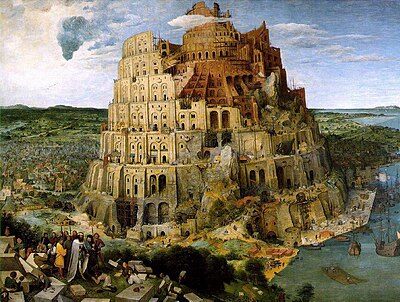
The Tower of Babel by Pieter Brueghel the Elder (1563)
~ The Tower of Babel is the famous story of how man in pride attempts to reach the heavens. Utopia is man’s attempt to create heaven on earth. Yet as man tries again and again and fails again and again, should we not admit that Utopia is out of reach of our mortal hands?
After writing the first and second meditation, I have humbly requested the feedback of many friends and associates of whom I hold in high regard and respect. Of some of the important feedback that I received was that both the First and Second meditations contain no solid or absolute conclusion on the subject in discussion. I would like to stress as I have done so in the First meditation that all that I have written in the Meditations consists of an observation that attempts to use the Socratic Method (elenchus) to which a problem is solved by breaking it down into a series of questions to gradually find the answer (or a truth if one so exists).
In the first meditation, I have pointed out that the limited ability of reason and senses is inadequate for an absolute understanding of God. This results in a direct attack upon morality as defined by religion through divine revelation(s). The second meditation continues by arguing that to preserve order, ethics and morality are needed even though the ‘right’ and ‘legitimate’ ethics and morality are often in question. Furthermore, history has proven to us that power is essential to eliminate to a certain extent absolute moral relativism.
The logic of the argument is that without the elimination of absolute moral relativism (whereby everything goes), there would be anarchy and chaos at a level that mankind would be unable to coexist as a community and much less as a culture and a civilization. Yet, since pure reason alone has not been able to unite all forms of religions, ethics, and secular moral philosophy, we find that power is essential in order to forcefully enforce the will of one group of individuals upon the majority.
Yet, the origins of power come from a rather linear form of bestowment as it comes not as an intrinsic property like in nature with a lion being more ‘powerful’ than a lamb but as a ‘gift of acceptance’ in which the leader, or ruling party is generally accepted by the relevant community. This is to say that power to preserve order must come from the acceptance of at least a group of people within the community or risk being illegitimate.
Consequently, to maintain order, a ruler needs power, which comes from the people. A ruler would then continue to hold power as long as he is perceived to be an agent of justice (here justice is subjective and may be just a form of perceived justice) or through military and economic might. While it is common to find that the minority in the community often rules the majority, the loss of the ruler’s core supporters (power base) would spell the end of his power and thus his legitimate rule of the community.
Of Utopias and the Great Lie
The word utopia can be traced to a book written by Sir Thomas More (1478-1535), the chancellor of England. Coined from the Greek terms ou topos, utopia refers to a place of perfection in which people enjoy health, harmony, and happiness. Political philosophy is filled with utopian models of society to which different philosophers come out with different answers as to what would lead to a state of utopia.
Plato’s Republic

Philosophy according to Plato is the answer to which a utopian state can be created. In Plato’s Republic, a simple society with no government and scarcity would, in order to avoid monotony and tedium, seek luxury. But the want of luxury would force the need of expansion, to which soldiers are necessary for growth and to safeguard the state’s newly acquired territory. Soldiers would then form the second layer in society that is called the guardians.
The guardians are then educated in a wide range of physical and mental aspects and to live without any form of personal property. At age 20, the guardian class would be divided into two with the first group assigned as auxiliaries to defend the Republic as full time soldiers. The second group would retain the name guardian and continue their education. Selection at this particular point would be based solely on merit and as the guardian gained wisdom and knowledge after a prolonged period of study, he then may become a philosopher.
Due to the importance of wisdom above all other things, philosophers alone are allowed to rule the Republic as philosopher-kings. Thus Plato’s Republic is made up of three classes of which the first is the normal citizen (farmers and artisans), the warrior-soldier class, and the philosopher-guardians. Thus, behold the Republic, a utopia to which philosophy would be the answer to the perfect society.
Francis Bacon’s New Atlantis
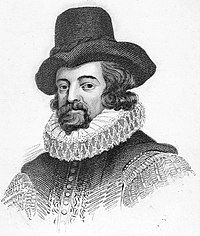
The New Atlantis, written by Francis Bacon (1561-1626) , describes a voyage by sea to an island that is governed in such a way that its inhabitants are in happiness and bliss. The island which is called Bensalem is geographically isolated and, therefore, free from invaders while at the same time economically self-sufficient. In Bensalem, the family is the foundation of the society and perfect laws ensure that justice and the good of all are upheld.
Distinctively different than Plato’s Republic is the importance of science as the cornerstone of which scarcity of resources and the needs of the people would be fulfilled. Also through science, natural disasters can be predicted and thus precautionary measures implemented to protect Bensalem from tragedy. To achieve technological and scientific superiority, the best minds are brought together at a great college whereby experimentation and observation would bear fruit for the greater good of all.
Karl Marx’s Classless Society

For Karl Marx, economic inequality associated with capitalism is the cause of mankind’s suffering and hardship. In Marx’s Capital, economics in which the production and distribution of necessities is the crucial element of human life. According to Marx, capitalism that encourages income inequality, widespread economic imbalance, and the monopoly of the means of production by owners would inevitably crumble under its own weight through revolution of the working class (proletariat).
The destruction of capitalism would then lead to the first stage of communism whereby a dictator of the proletariat will remain as a bulwark against counter-revolution. Also in this stage, revolutionary policies that would include the abolishment of private property and the right to inheritance would be carried out. After all means of production are owned by the state, the government would slowly fade away, as a classless society would emerge to which all individuals would be equal and live in a utopian state.
A Critique on Utopias
Never in history has a utopian state has ever existed on the face of the earth. Whether it is the Mesopotamians, Egyptians, Ancient Greeks, and Romans, a utopian state with all parties and individuals content and happy has never been within mortal grasp. Indeed, Plato’s Republic and Bacon’s New Atlantis have never been carried out in reality due to the obvious reasons of impracticality.
Although Plato’s work was right in stating that rulers should be well versed in philosophy, and that philosophy is the supreme wisdom, who is to determine which school of philosophy is greatest and most complete? Similarly Bacon’s New Atlantis assumes that scientific and technological superiority could be sustained throughout the ages which, of course, in relation to reality, is an impossibility.
While it should be noted that history has never seen a utopian state, the real question is whether a utopian state is sustainable. Due to the fact that economic, demographic and environmental changes occur constantly over time, would it be possible to have a form of government that could suit all challenges at all times? Evidently, a utopian state seems not to be a practical possibility.
This then brings us to the last utopian model which unlike the earlier two has been given a chance in history. Communism did indeed achieve widespread popularity most notably in the former Soviet Union and also in the People’s Republic of China. But instead of ushering an age of happiness and prosperity, the abolishment of private property took away the individual’s incentive for labor and achievement.
As the situation as described above intensified, Communism’s policies that attempt to create economic equality made everyone equally poor (though the social elite maintain a certain level of luxury). This brought a systemic collapse in the economic structure of the Soviet Union while China under the leadership of Deng Xiaoping pursued more ‘open door’ policies and market oriented economic activity in order to avoid an economic disaster in China. Changes in China showed the departure from some of the principles of Marxism and Communism at least on the economic front.
We can now see that Marx’s prediction of the collapse of Capitalism did not materialize and that Communism’s economic policies brought not prosperity but poverty to the countries that adopted them. Surely a country with no food on the table is unable to achieve a state of utopia. Not only did Communism fail to be better than Capitalism, it performed far below that of market oriented economies.
After taking a brief look at the models of utopia, we can conclude that none of the three models above are viable and indeed practical as a form of government. Even if the failure of the utopian state rests upon human nature, it would be impossible to eradicate all traces of human nature unless it comes to pass that one would be able to eradicate free will and conflicts of interest (life at this point becomes meaningless). If utopia is unattainable, we should then take a look at the various forms of political systems that exist today in reality. As such, the next meditation will attempt to compare and contrast the various types of political systems in the world today.
~
_____________________________________________________________


No comments:
Post a Comment